Key Takeaways
- SASE integrates networking and security into a unified, cloud-native service, enhancing scalability and security.
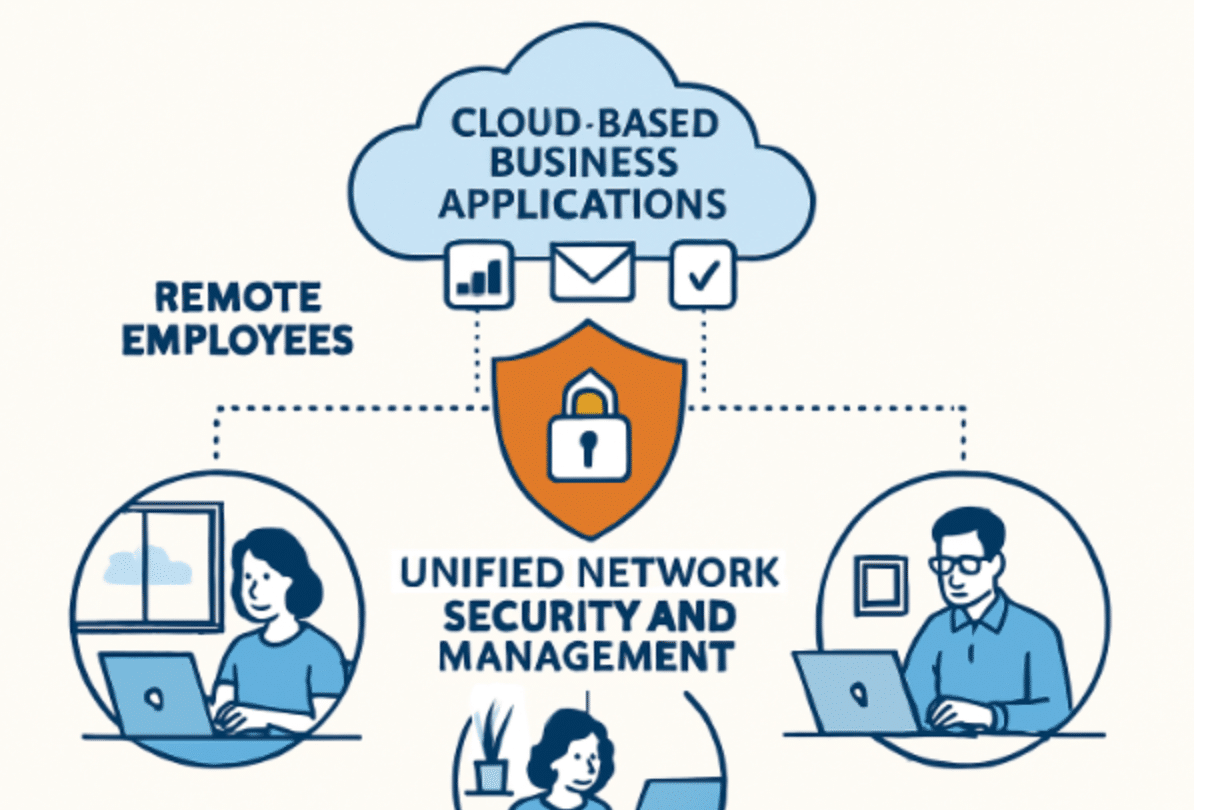
- It supports remote and hybrid workforces by providing secure, identity-aware access to applications.
- Implementing SASE can lead to cost savings by reducing the need for multiple-point solutions and simplifying network management.
Table of Contents
- Introduction
- Understanding SASE
- Key Benefits of SASE
- Implementing SASE in Your Organization
- Real-World Examples of SASE Adoption
- Challenges and Considerations
- Future of SASE
- Conclusion
Modern businesses are constantly seeking technology solutions that deliver robust security, greater agility, and efficient performance. As organizations expand to accommodate more remote and hybrid workforces, they face new networking challenges that traditional architectures cannot address. The emergence of secure access service edge (SASE) provides a unified, cloud-native approach to delivering network and security services, helping businesses adapt to the demands of digital transformation.
SASE unifies advanced networking capabilities with security services, including secure web gateways, firewall-as-a-service, and cloud access security brokers. This next-generation framework ensures secure, consistent access to applications, whether employees are in the office, working remotely, or on the move. As organizations retire legacy solutions and turn to the cloud, SASE simplifies management, enhances visibility, and fortifies data protection across distributed environments.
With cyberattacks rising and the attack surface growing due to cloud applications and mobile endpoints, companies are recognizing the need for a security model that scales effortlessly and adapts quickly. The SASE model addresses this need by converging multiple security functions and delivering them flexibly, providing comprehensive defense without sacrificing performance.
Gartner’s introduction of SASE in 2019 signaled a shift toward the future of secure networking. SASE’s adoption rate has soared as organizations move toward hybrid and remote work environments. Businesses are increasingly relying on SASE to deliver seamless, secure access at scale while optimizing resource allocation.
Understanding SASE
SASE (pronounced “sassy”) represents a new paradigm in enterprise networking and security. It blends wide-area networking with critical security features, including secure web gateways (SWG), cloud access security brokers (CASB), firewall-as-a-service (FWaaS), and zero-trust network access (ZTNA). These functions are delivered through the cloud, so protection and policy enforcement occur as close to the user as possible, regardless of where the user is located.
This convergence streamlines the technology stack, replacing the need for numerous disconnected appliances and point solutions. With SASE, traffic can securely travel through efficient, optimized network paths, while context-driven policies are enforced based on identity, device, and application. Businesses benefit from increased agility, simplified deployment, and consistent data protection across endpoint types and user locations.
Core Components of SASE
- Wide Area Networking (WAN): Connects users to distributed resources efficiently.
- Security Services: Includes SWG, CASB, FWaaS, and ZTNA integrated as cloud-delivered services.
- Cloud-Native Management: Centralized policy and control, offering real-time visibility and rapid threat response.
- Identity-Driven Access: Ensures that security is based on user, device, and context rather than solely on IP or physical location.
Key Benefits of SASE
- Scalability: Cloud-native SASE platforms scale instantly to accommodate growing teams, new branch offices, or evolving workloads without requiring new physical infrastructure.
- Support for Remote Work: Users working from anywhere have the same level of protection and access as those on-premises. This ensures that sensitive data and corporate resources are always shielded from cyber threats.
- Cost Efficiency: By consolidating multiple-point solutions into a single service, SASE eliminates management complexity, reduces vendor sprawl, and lowers operational costs.
- Improved Performance: SASE leverages intelligent routing and optimization to ensure application traffic takes the most efficient route to its destination, reducing latency and boosting productivity.
- Seamless Compliance: With centralized visibility and policy enforcement, meeting regulatory standards becomes more straightforward, helping organizations avoid penalties and maintain customer trust.
Implementing SASE in Your Organization
The transition to SASE requires both strategic planning and tactical execution. Begin by evaluating your current technology stack, identifying network vulnerabilities, and mapping critical business processes. Defining security policies that reflect compliance requirements and operational goals is essential to guiding the rollout.
- Assess Current Infrastructure: Inventory your network and security assets, determine consolidation opportunities, and identify integration touchpoints.
- Define Security Policies: Policies should align with user roles, risk levels, and regulatory requirements. Zero-trust principles should be prioritized to minimize attack surfaces.
- Select a SASE Provider: Choose a partner with solid experience, proven cloud infrastructure, and a track record of reliable performance. The provider should also support granular policy controls and advanced threat protection.
- Plan the Transition: A phased approach, focusing first on high-risk or high-traffic user groups, can reduce disruption. Legacy systems should be phased out gradually to maintain productivity.
- Monitor and Optimize: Once implemented, continuously track performance and gather user feedback. Use analytics to refine security policies and adjust traffic management for ongoing network efficiency.
External resources from industry leaders, such as Cisco, offer additional best practices and case studies to guide successful SASE implementation.
Real-World Examples of SASE Adoption
Many organizations from diverse industries have embraced SASE to drive innovation and mitigate modern risks. For example, a healthcare provider rolling out electronic health record systems across numerous clinics used SASE to centralize user authentication and data protection. This approach improved regulatory compliance and data security, even as clinicians accessed records remotely.
In the financial sector, a global banking firm adopted SASE technologies to provide secure remote access for employees handling sensitive customer information. Through identity-driven security policies and centralized monitoring, the institution reduced data breaches and streamlined its compliance processes. Education and government sectors are also leveraging SASE for secure, scalable remote access to learning and administrative resources.
Challenges and Considerations
Moving to a SASE architecture is not without hurdles. Organizations often face integration challenges when combining new SASE services with established legacy systems. Ensuring compatibility with existing applications and maintaining a consistent user experience are common obstacles. Additionally, selecting a qualified SASE provider and educating stakeholders on the operational changes are critical steps for minimizing disruption.
To navigate these complexities, businesses should seek expert guidance and invest in comprehensive training. Staying proactive with regular assessments and policy updates can help maintain protection as infrastructure and workforce needs evolve.
Future of SASE
As cyberattacks grow more sophisticated and organizations increasingly rely on cloud-based resources, SASE’s comprehensive platform is positioned as a pillar of modern network protection. Continued advances in machine learning and artificial intelligence will further enhance SASE capabilities, enabling more autonomous and effective threat detection and response. SASE is likely to remain essential for organizations prioritizing flexibility, resilience, and streamlined operations in an uncertain threat landscape.
Conclusion
SASE technology represents a seismic shift in how organizations secure and manage their networks. By combining cloud-delivered networking and security services into a single platform, SASE empowers businesses to streamline operations, boost security, and support agile workforces. Enterprises seeking a future-ready infrastructure should consider SASE as a foundational component for digital transformation and ongoing success.